MusicRowFeatured2
My Music Row Story: Big Machine Music's Alex Heddle
 5
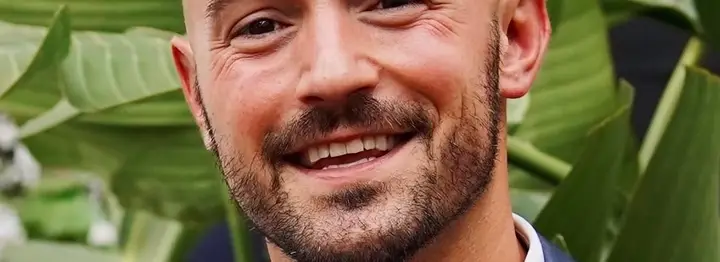
Alex Heddle is Sr. VP, Publishing at Big Machine Music (BMM), where he has spent more than a…
A graduate of Leadership Music’s Class of 2022, the Belmont University alum’s prior stops include Love Monkey Music, Writer’s Den Music, Propel Music Publishing and Ash Street Music.
MusicRow : Where did you grow up? Tell me about your upbringing.
I grew up in Montreal, Canada. When I was 10 years old, my dad got a new job. It's going to sound extremely random, but it was in Southeast Missouri, in a town called Cape Girardeau. So I grew up half in Montreal, and then my teenage years were all in Southeast Missouri.
My dad always loved music, so from as far back as I can remember, he was playing music throughout the house. No one was a musician themselves, but my dad loved a lot of classic rock: Led Zeppelin, Pink Floyd, Lynyrd Skynyrd, The Beatles, Neil Young. While living in Cape Girardeau, a friend of mine mentioned he was learning how to play bass. He wanted to put a band together, so I decided I would start learning how to play guitar. And playing guitar was the first tangible manifestation of my love for music.
So when you were learning guitar, were you intent on being a musician when you grew up?
At first it was just learning guitar so I could be around my friends playing music. Then it was the dreaming; could this band be something? We watched a lot of VH1 Behind the Music , and idolized the band stories. At the end of high school, the plan was for our band to move as a cohesive unit to Nashville. Then when the time came, I was the only one that showed up.
I got to Belmont in 2004. Belmont was this incredible place where everyone was on the same path. You're like, "wow, everybody is a possible person that I can play in a band with, or talk music with." The only downside was that no one was truly unique.
It's funny, I didn't have a very standard college experience. The summer after my freshman year, I was a raft guide in Montana. When I came back, the lead singer of another band we were friends with called me and told me there was an internship at a publishing company on 16th Avenue. I didn't know anything about publishing, so I just said, "Yeah, sure, I'll go interview." My interview was with June McHugh , the owner, and Greg Gallo , who was in his first full-time gig as a song plugger at a small company called Ash Street Music.
I got the internship. I always say I didn't know any better back then. I wasn't getting credit, and I wasn't getting paid, but I just showed up all the time. By the next semester, I started moving my classes earlier and later to give myself a full day at the publishing company. They gave me a salary midway through my senior year, and I was a full-time song plugger there for my last semester.
The first day that I worked as an intern was Josh Thompson 's first day as a professional songwriter, so that was the start of our friendship. Gallo started taking me to pitch meetings and introduce me to A&R’s, and soon I started taking my own pretty quickly. I got to meet Michael Knox, Brian Wright, Autumn House, Arturo Buenahora, just a bunch of great A&Rs. This was all while I was still in college.
I was there until 2008. I graduated, and then the great financial crash happened. The company had a single investor, and she essentially just ran out of funds. So I got laid off and spent about eight months selling my instruments and doing odd jobs to pay rent.
Then I met Pete Robinson , an A&R guy from New York who had signed Dave Matthews Band and a number of other artists. We got some funding from Michael McDonald of Mick Management and started a little publishing company in the RCA building where Dave Cobb 's studio is now. We didn't have a lot of money, so we had to be selective on our signings, but we did sign Brad Tursi to his first publishing deal there. From there, I went over to Writers Den Music Group, and after about a year and a quarter, the investor was dissolving the company. The first seven years of my career were essentially a lot of hopping around. Records weren't selling and it was just really thin time in the business.
After that, I took the LSAT and was going to go to law school. Then out of pretty much nowhere, Leslie DiPiero called me. She and Bob [DiPiero] were looking for a creative person to manage their companies. I decided to give publishing one more try.
I was so disillusioned. I hadn't had a hit. I'd worked with some incredible people and I was really hustling, but again, I was really disillusioned. Leslie and Bob convincing me to come in really felt like the turning point. With the DiPieros, I got to meet a whole other level of people: legendary songwriters, high-level producers and managers, especially.
About two years later, Mike Molinar was starting Big Machine Music. We had previously worked on some ideas and one particular business plan. I had this idea of purchasing a classic catalog that had regular royalty streams and building a new company on top of that. I reached out to Mike because he had a reputation for being a knowledgeable and creative business person. It ended up not working out, but shortly thereafter that became a wave in the industry. Mike came back to me at the beginning of 2013, and I actually turned him down the first couple of times. Mike's so passionate; he's great at getting people to believe in a vision. I said yes. It was heartbreaking to leave the DiPieros, but I'm obviously glad that I made the decision.
No, Tali Giles, now Tali Canterbury , was there a few months before I was. I came in April of 2013. Actually, yesterday was my 13th anniversary. I met with Scott [Borchetta] during my hiring process. I had an hour-long interview with him and I was so nervous. The only thing I remember is talking about the Foo Fighters for 20 minutes.
Our first six months were wild. We signed Maddie & Tae first. I went from working with songwriters to my first artist project. And to boot, it was two 17-year-old girls, so it was a total new experience for me. They were so evidently talented, though. We had daily brainstorming sessions and would discuss who else we could go after. Which writers were coming out of deals, who we had relationships with, and so on. Jonathan Singleton was one of the first that we set our targets on, followed closely by Josh Thompson . Josh and I had kept our relationship going throughout the eight years that we'd known each other. Then Laura Veltz , who we were managing at first before entering into a joint-venture with Chappell to be her publisher. Justin Moore and Dustin Lynch were already signed to pub deals there, so we started jumping in with them as well. So that was our original crew.
What are you most proud of from those early days?
The Maddie & Tae No. 1 for "Girl in a Country Song." That was our first big hit, and we published all three of the writers on it. That really paved the way for us to, one, keep our doors open, but also grow our company a little bit. That was our first watershed moment. Then Jonathan came with "A Guy Walks Into a Bar" with Tyler Farr , and Josh broke next with "Any Ol' Barstool", his first number one, with Jason Aldean . We were still pretty small back then and all of these were such huge moments.
What do you remember about the next few chapters?
The next chapter was really about artist development for us. Around 2016, Jonathan met Luke Combs and brought him to us. I think the text message was like, "This MFer is better than me." And that's a big compliment if you know Jonathan. When Luke came in and played "When It Rains It Pours" and some of the other hits from that first album, it became very, very evident that it was something we had to do. Mike [Molinar] literally almost locked the doors and didn't let him and [Chris] Kappy leave until they agreed on a deal. Around the same time we signed Brett Young , and looking back, those are two enormous signings. And of course, that same year, we signed Jessie Jo [Dillon] .
Tell me about meeting Jessie Jo and what you saw.
Oh man, we met years before that at a bar called Winners that's now Riley Green 's Duck Blind. We hung out that day and liked a lot of the same music, and we had a lot of mutual friends. Our friendship grew from there, and eventually she, Mike and I started talking about working together. Unfortunately it turned out she had another year on her deal. So we just stayed close.
She's always been this talented. Sometimes, with great songwriters, it just takes finding the right tracks for the train. Our first big hit with her was "Break Up in the End," the Cole Swindell song. And then "10,000 Hours." I had been bugging Dan [Smyers] to write with JJ for a long time, and that was the first song they ever wrote together along with Shay [Mooney] and Jordan [Reynolds].
Then at the beginning of 2022, I remember JJ coming into the office and telling me, "I'm going to go all in, really get obsessive and work my tail off for the next 18 months and see if I can turn it up a notch." And quite literally, she never stopped. That year was the first year she got 20 cuts in a year. The next year was 40, then it was 50, and last year was over 50. Around that time, I heard of Megan Moroney via Lizzy Gallatin , and we met with her. I remember calling JJ and saying, "You have to work with this girl." They got together shortly thereafter, and that day they just fell in love with each other.
Tell me what's putting gas in your tank now.
I feel like we’re currently in our third chapter of our company. It started with the signing of Ryan Hurd , who we've had some extremely big hits with. We then signed Matt Dragstrem , who has had around 35 cuts since January this year; he's just off to the races. About a year later, we signed Geoff Warburton . Geoff had previously had a lot of success in pop, writing all those Shawn Mendes songs, but had been working in Nashville for a few years when we signed him. It was month one that he and Chase [McGill] and Drag wrote "But I Got a Beer in My Hand," and then in his second month, he and Jessie Jo wrote "Back Then Right Now" with Tyler Hubbard .
Every chapter has been great. I equate it to being a parent in that every age is your favorite age. This chapter is incredible because Drag and I went to Belmont together. Ryan and I met through my college roommate. Laura [Veltz] , we've worked with for thirteen years now. Jessie Jo, ten years. These are not only partnerships, but really tight friendships. Most everyone in the building right now are actively having success, and that puts gas in the tank.
You've also grown as a leader there. Is that part of your brain different?
Yeah, it is. The hardest part of a company growing is learning how to handle leadership expectations. I was so used to running and gunning, where the world's my back, it's on me, and that's profoundly easier, funny enough. Being open to other people's ideas and really collaborating with them is something I've learned. Now, I want more and more collaboration. I want our young executives to keep signing and bringing in incredible talent. What’s crazy is I still feel like I'm still in my first decade in the music industry, and I'm starting my third. I've definitely failed just as much as anybody else, but failure teaches you lessons that you can take forth into success.
What's your favorite part of what you do?
Besides the actual music itself, the relationships and friendships. Having hits is a lot of fun, but it's so much more fun when it's someone you've worked with for a long time and care about. Songwriting is a tough business, and no one is guaranteed anything tomorrow, even if they had everything yesterday. So every time we have a hit with one of our writers or artists, it's a small miracle.
What moment have you had where your little kid self in Canada would be like, "Oh my God, this is so cool"?
So many. Anytime I'm stressed, I remind myself that this is what I wanted to be doing when I was 19. I didn't know what this was when I was 16, because no one knows what publishing is. I'm still explaining it to my family.
So many of the moments that come to mind are live performance moments. At CMA Fest in 2018, we had both Luke Combs and Brett Young doing the Nissan Stadium shows for the first time. We were front of house, and Luke was performing "Hurricane" as his last song. There were 60,000 people singing it back to him, and you could see the moment hit him. You could see him just be like, "Whoa," in the breakdown before the last chorus.
"Drowns the Whiskey" was our first real nomination for CMA Song of the Year. It was written in the first two months of Josh being signed to us, on his bus, with Brandon Kinney and Jeff Middleton . And it sat dormant. Then at the ACMs, Kevin Neal introduced me to Jason [Aldean] , and I ended up talking Jason's ear off about Josh Thompson and that song. Very soon thereafter, Jason listened to "Drowns the Whiskey" and put it on hold, and the rest was history. I think it was 6 years old by the time it was a hit. So going to that CMA Awards, it was almost the entire history of our company, to that point, in a song.
There was a moment when "Die from a Broken Heart" could have faltered. It had been on the radio for so long, and now it's a quadruple platinum song. The girls have worked so hard for so many years, so to have a hit of that magnitude was pretty big. And it was during COVID, so we had to go celebrate the No. 1 in Haley McLemore 's backyard.
And Sara Davis , "abcdefu." That was our first Top 40 No. 1. I actually have "ABC" tattooed on my knee. When they wrote it, we were convinced it was a hit, and I told Gayle and Sara that when the song crossed 100 million streams, I would get "ABC" tattooed on my knee. They also agreed to get tattoos. I think it's at 1.5 billion now. Thankfully, I don't have to keep getting tattooed every 100 million.
Read at MusicRow