
MusicRowFeatured2
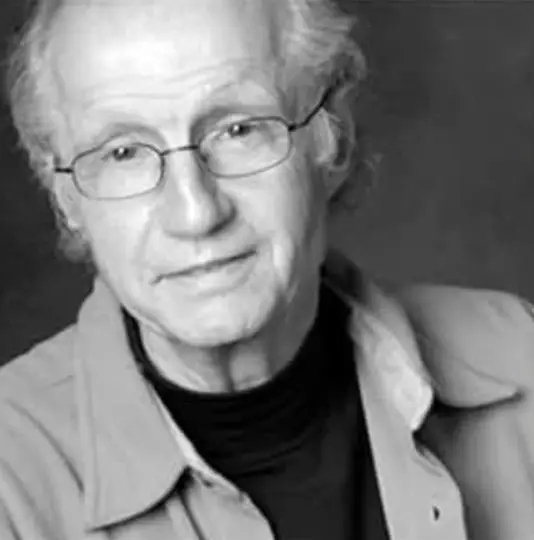
Songwriter Rory Bourke Passes
 2
2Nashville Songwriters Hall of Fame member Rory Bourke has died at age 84. Bourke is noted for…
Bourke is noted for co-writing such country standards as Charlie Rich’s “The Most Beautiful Girl,” George Strait’s “You Look So Good in Love” and Anne Murray’s “A Little Good News.” Between 1972 and 2015, there were 61 charted versions of his songs, 42 of which became top-20 successes. Also among those songs were 29 top-10 hits and 10 No. 1 smashes.
Rory Michael Bourke was born in Cleveland, Ohio. As a youngster, he was fascinated by movie musicals, which led him to imagine a career in the music industry. Following college, he headed for Nashville in 1964.
He entered the country-music business as a promotion executive at Mercury Records on Music Row. But he yearned to become part of Nashville’s songwriting community. He met Eddie Rabbitt (1941-1998), who was also an aspiring songwriter at the time. They co-wrote “Patch It Up,” which Elvis Presley recorded in 1970 and “Captured,” which later became a 1974 Terry Stafford single.
Bourke quit his dependable job and decided to plunge into songwriting full-time. He was determined to succeed, no matter what. “There was no Plan B,” he recalled. Publishers Don Gant and Henry Hurt encouraged him, and the latter signed him to Chappell Music as a staff songwriter in 1971. The following year, Mel Tillis sang Bourke’s co-written “Neon Rose,” and it became the fledgling songwriter’s first top-10 success.
Bourke teamed up with songwriter Norro Wilson and producer Billy Sherrill to craft “The Most Beautiful Girl,’ which became a No. 1 smash for Charlie Rich in 1973. The ballad sold a million; topped the pop, country and easy-listening charts; and became an international hit on German, Irish, French, Canadian, Dutch, Belgian, Australian, and Norwegian charts.
Although chiefly known as a songwriting collaborator, Bourke wrote solo songs that became chart entries for Bobby Borchers, Johnny Carver, Ronnie Prophet, Kim Charles and Lynn Anderson during his early songwriting years.
Teaming with others, he was responsible for top-10 hits by Billy “Crash” Craddock, Mickey Gilley, and Cristy Lane during the 1970s.
Rory Bourke’s most successful and prolific songwriting collaborator was fellow Nashville Songwriters Hall of Fame member Charlie Black (1949-2021). In 1979, the new team had a No. 1 hit when Anne Murray recorded their “Shadows In the Moonlight.”
The Black/Bourke partnership continued to find success in the 1980s. Sometimes as a songwriting duo and sometimes with added collaborators, they provided Murray with “Lucky Me” (1980), “Blessed Are the Believers” (1981), “Another Sleepless Night” (1982), and “A Little Good News” (1983). The last named won the CMA Single of the Year and earned Murray a country-vocal Grammy Award. Bourke and Black were also credited on “I Know a Heartache When I See One” (Jennifer Warnes, 1979) and “Do You Love As Good As You Look” (The Bellamy Brothers, 1981).
Rory Bourke was noted for mentoring up-and-coming tunesmiths. When singer-songwriter K.T. Oslin (1942-2020) arrived on the Nashville scene, Bourke collaborated with her on “Round the Clock Lovin’” (Gail Davies, 1982) and “Lonely But Only for You” (Sissy Spacek, 1983), as well as on Oslin’s own singles “Two Hearts” (1990) and the chart-topping “Come Next Monday” (1990).
Mike Reid was another of Bourke’s frequent collaborators. They co-wrote Ronnie Milsap’s No. 1 hit “Where Do the Nights Go” (1987), Tanya Tucker’s “It’s Only Over for You” (1987), Don Williams’s “I Wouldn’t Be a Man” (1987), Gene Watson’s “Back in the Fire” (1989), and Lorrie Morgan’s “He Talks to Me” (1990).
Working with a variety of other cowriters during the 1980s, Bourke’s credits also included such major hits as “You Look So Good In Love” (George Strait, 1983), “Baby I Lied” (Deborah Allen, 1983), “Let’s Stop Talkin’ About It” (Janie Fricke, 1984), and “Too Good to Stop Now” (Mickey Gilley, 1984).
In recognition of his outstanding song catalog, Rory Michael Bourke was inducted into the Nashville Songwriters Hall of Fame in 1989.
His songwriting success continued into the 1990s. Bourke’s co-written hits in the decade included “I Couldn’t See You Leaving” (Conway Twitty, 1991), “Tender Moment” (Lee Roy Parnell, 1993), “Little Red Rodeo” (Collin Raye, 1997), and “Bye-Bye” (Jo Dee Messina, 1998).
Rory Bourke and Phil Vassar co-wrote “Carlene” (2000), which became Bourke’s last top-10 songwriting hit to date. In 2010, Josh Turner revived Bourke’s co-written “I Wouldn’t Be a Man.” In 2014, The Voice TV-competition winner Craig Wayne Boyd revived “You Look So Good In Love.” Others who have recorded his cowritten songs include Gary Stewart, Jeanne Pruett, Con Hunley, Louise Mandrell, Johnny Rodriguez, Crystal Gayle, Tommy Overstreet, and Shelby Lynne, among others.
During his hit-studded career, Bourke was named ASCAP’s Country Songwriter of the Year in 1975, 1979, and 1983. He earned 11 BMI Awards and 45 ASCAP performance awards.
Rory Michael Bourke passed away on Saturday, Oct. 10. Funeral arrangements have not been announced.
Read at MusicRow