
MusicRowFeatured2
BREAKING: Country Music Hall Of Famer John Anderson Passes
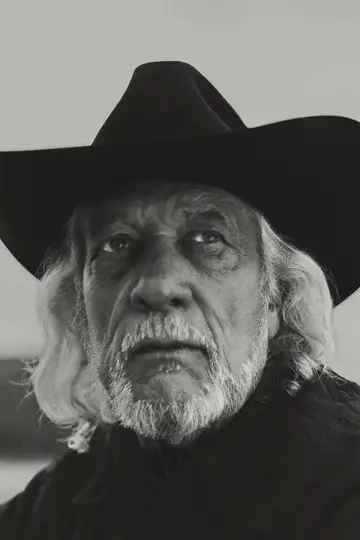 2
John Anderson, a member of the Country Music Hall of Fame, has passed away. He was 71. Known…
John Anderson , a member of the Country Music Hall of Fame, has passed away. He was 71.
Known for his unmistakable drawl and a sound that blended traditional country with rock, Anderson scored chart-toppers including “Wild and Blue,” “Swingin’” and “Money in the Bank.” His 1991 single “Straight Tequila Night” sparked a major career resurgence, and the following year’s “Seminole Wind” became his signature song, selling three million copies. He earned the CMA’s Single of the Year and Horizon Award in 1983 and the ACM’s Career Achievement Award in 1994, and he was inducted into the Country Music Hall of Fame in 2024.
The news was shared on Anderson’s official social media pages .
"It is with the heaviest of hearts that we share the passing of our beloved husband, father, grandfather, and best friend," the post reads. "To the world, he was a gifted country music singer whose voice and songs touched countless lives. To us, he was so much more. He was the heart of our family, the one who made us laugh, loved us fiercely, and made every ordinary moment feel special. We are completely heartbroken."
The below bio was provided by the Country Music Hall of Fame at the time of his induction, in 2024.
Some singers get the knock of being too Country for rock and too rock for Country. That was never the case with John Anderson. At his best, Anderson was too rock and too Country, as likely to sing songs by Van Morrison or Willie Dixon as he was ones by Lefty Frizzell or Marijohn Wilkin.
Born December 13, 1954, John David Anderson grew up in Apopka, FL, named for the large lake just northwest of Orlando. As a youth, he played in local rock groups like the Living End and the Weed Seeds. He soon turned to Country Music and counted Merle Haggard as one of his heroes.
He moved to Nashville shortly after graduating high school in the early 1970s, following his older sister Donna, singing with her in a duo. While in Nashville, he performed gigs for a few dollars a night and worked odd jobs. Of those, the one he held the longest, he told the Orlando Sentinel in 1979, was a construction gig where one of his jobs involved helping roof the Grand Ole Opry House prior to its 1974 opening.
He briefly recorded for a small independent label, which quickly folded, but not before he cut a song called “What Did I Promise Her Last Night.” This got the attention of publisher Al Gallico, who got him a publishing deal and signed to Warner Bros. Records. He then moved to Texas to check out the progressive Country scene but soon returned to Nashville.
Norro Wilson produced his early records for the label. Each of Anderson’s singles tended to do a little better than the previous one, enough so that Warner Bros. stuck with him, finally releasing his first, self-titled album in 1980. He’d put out seven singles, and with their echoes of Haggard, Frizzell, and Hank Williams, modest early hits like 1979’s “Your Lying Blues” and “She Just Started Liking Cheatin’ Songs” preceded fellow traditionalists Ricky Skaggs, George Strait and Randy Travis. In an era of pop overtures and crossovers, Anderson favored shuffles, waltzes, and heartbreak ballads sung with a back-of-the-throat drawl that could sound like he was choking back tears. His first Top 5 hit — a version of Billy Joe Shaver’s “I’m Just an Old Chunk of Coal (But I’m Gonna Be a Diamond Someday)” — came nearly four years after his label debut.
In late 1982, as the title track for Anderson’s fourth album, Wild and Blue , co-produced by Anderson and Frank Jones, was on a trajectory to become his first No. 1 single, several radio stations began playing another song from the album, one Anderson had written with Lionel Delmore, the son of the Delmore Brothers’ Alton Delmore. The buzz on the other record became so loud that Warner’s promotion team had to encourage programmers to wait until “Wild and Blue” had run its course. Sure enough, three weeks after “Wild and Blue” hit No. 1, “Swingin’” hit the Country charts. Ten weeks after that, the mildly suggestive number became Anderson’s second chart-topper. The record became so popular that some rock and pop stations began spinning it.
The Country Music Association recognized "Swingin'" as the Single of the Year at the 1983 CMA Awards, where Anderson also was named the Horizon Award winner.
Anderson and Delmore wrote several other songs together, including the 1995 Top 3 single “Bend Until It Breaks.”
Anderson had five Top 5 singles, including three No. 1s, in two years, but subsequent records peaked farther down the charts as the next wave of young performers arrived.
Following brief stints with MCA Records Nashville and Universal Records, Anderson signed with BNA Records, a subsidiary of RCA, in 1991. When “Straight Tequila Night” came out late that year, Anderson had had just one Top 10 single in seven years.
But “Straight Tequila Night” brought Anderson’s career roaring back, making him one of only a handful of acts who’d begun releasing records in the 1970s who continued to have major successes into the 1990s.
Anderson’s 1990s run equaled what he’d done a decade before as he hit with records like the Dire Straits cover “When It Comes to You,” the chart-topping “Money in the Bank,” and the regret-filled “I Wish I Could Have Been There.”
One of those 90s hits, “Seminole Wind,” had a localized, environmentally conscious theme that did not initially strike BNA executives as particularly commercial. Though Anderson did not write it as such, he knew it was capable of commercial success. Written after a visit with his 95-year-old grandmother in Florida, the song referenced the development of the Everglades in Anderson’s native Florida, flood control efforts that decreased its size by half in a century, and the 19th-century Seminole resistance leader Osceola. Though the record peaked at No. 2, 1992’s “Seminole Wind” sold three million copies and became a career-defining record for Anderson.
After BNA, Anderson recorded for Mercury Records, Columbia Nashville, the Warner imprint Raybaw Records, Country Crossing, and Bayou Boys Music. In 2020, he worked with Johnny Cash collaborator David Ferguson and the Black Keys’ Dan Auerbach on his 22nd studio album, Years .
In addition to Anderson’s two 1980s CMA Awards, he participated in the 1994 Album of the Year win for Common Thread: The Songs of the Eagles, on which he covered “Heartache Tonight.” That same year, the Academy of Country Music honored him with its Career Achievement Award.
Truly living out his songs, Anderson has lived the Country lifestyle for more than 45 years. When not on the road, Anderson enjoys spending time with his family, hunting, fishing and gardening. Anderson and his wife of more than 40 years, Jamie, share two daughters and their families. “I’ve been very fortunate and blessed to have such a great family life,” Anderson says.
With a discography spanning more than 40 years, Anderson’s career track has had enough peaks and valleys and twists and turns to resemble a rollercoaster. His musical vision hasn’t always aligned with the fashion of the times. But whatever John Anderson decides to sing, as soon as he starts, there’s no mistaking who it is. That voice is timeless, and it has found a forever home in the Country Music Hall of Fame.
Read at MusicRow